
Article
How to choose your ERP in 2026?
New rules in a market disrupted by AI
In 2026, ERP systems become intelligent, modular, and performance-oriented.
Discover how AI is transforming ERP selection and why Axelor stands out as a modern and agile alternative.
• ERP changes status: from tool to digital brain
Not long ago, an ERP was primarily a centralized management system an administrative engine designed to coordinate finance, sales, purchasing, production, and HR. In 2026, this vision is obsolete. ERP is no longer just a technical tool: it is a steering instrument, an operational reference, a digital brain that permeates the entire organization.
This shift is driven by technological convergence. Artificial intelligence, now ubiquitous, transforms data into actionable signals, anticipates scenarios, and proposes decisions.
Companies no longer buy an ERP; they buy the ability to evolve, react faster, and understand their own data. In an economic environment marked by uncertainty, this mastery becomes essential for survival. Business leaders recognize it: ERP has become the backbone of the company’s digital future.


• AI becomes the top priority in ERP selection
The explosion of generative AI and predictive models has reshuffled the deck. In the past, ERP systems were chosen for their functional coverage. Today, value lies in the intelligence they embed.
Organizations now want systems capable of:
- Automatically interpreting financial, commercial, or industrial data;
- Generating reports, analyses, and recommendations automatically;
- Assisting users through copilots that understand natural language.
What makes AI decisive is not only its computational power, but its ability to reduce complexity. Many ERP tasks are repetitive, time-consuming, and error-prone. AI absorbs these tasks and frees teams to focus on real value-creating activities. An ERP without AI in 2026 is an ERP that becomes outdated before it is even deployed.

• Understanding business needs: the foundation of any successful project
Despite this revolution, one principle remains unchanged: an ERP only delivers value if it is aligned with the company. Organizations can no longer rely solely on a functional specification document. They must understand their business dynamics, constraints, and strategic ambitions.
This introspection involves:
- Identifying processes that hinder performance;
- Spotting areas where human potential is underused or misused;
- Analyzing existing data flows and missing data;
- Anticipating future transformations (growth, diversification, international expansion).
Many companies realize that their current processes are not suited to the world of 2026. ERP selection must therefore support transformation, not freeze the organization in its current state.
The deeper the business analysis, the more the ERP becomes a catalyst for efficiency, consistency, and innovation.
• When AI optimizes departments: a tangible impact across the organization
AI embedded in ERP systems no longer just produces dashboards, it actively operates at the heart of the business and improves every department.
In finance, it accelerates closing cycles, detects errors in seconds, and simplifies audits. In procurement, it anticipates price fluctuations, automatically compares suppliers, and secures decision-making.
In supply chain management, it predicts shortages, optimizes inventory, and simulates scenarios to avoid disruptions. In sales, it identifies opportunities, improves forecasting, and personalizes marketing actions. In HR, it automates administrative tasks, facilitates recruitment, and improves talent management.
Everywhere, the impact is the same: AI streamlines processes, connects departments, and aligns decisions. It becomes a guiding thread that strengthens the company’s collective intelligence.
An AI-powered ERP does not only bring speed it brings clarity and enables better decisions, earlier and more easily.

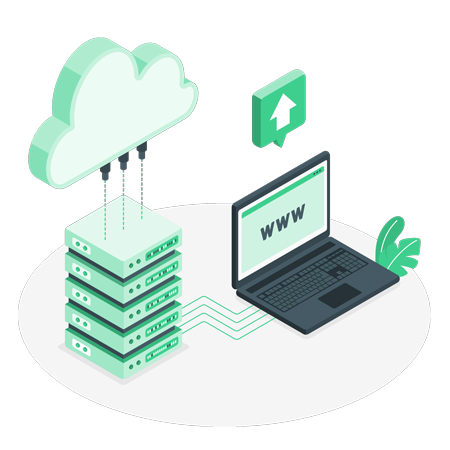
• Cloud and modularity redefine technology: the era of evolutive ERP
As technologies evolve, companies expect ERP systems to be easy to deploy, simple to maintain, open, scalable, and secure. Cloud technology meets these expectations precisely.
The shift toward cloud ERP is no longer a trend, it is the norm. What truly makes the difference in 2026 is the rise of composable architectures : systems capable of assembling or replacing functional components without rewriting the entire solution.
This modularity delivers several benefits:
- A significant reduction in total cost of ownership;
- The ability to add innovations without disrupting existing systems;
- Greater resilience to regulatory or industry changes;
- Immediate adaptability to new business needs.
ERP is no longer a rigid monolith, it is a living organism.
• Low Code: the competitive advantage companies didn’t expect
The rise of Low Code is one of the most striking developments in the market. For a long time, modifying an ERP was complex, expensive, and time-consuming. In 2026, companies want to regain control of their systems.
Low Code provides valuable autonomy:
- Quickly creating internal applications;
- Adjusting workflows without external intervention;
- Modifying forms or business rules without heavy development;
- Experimenting with solutions in hours instead of weeks.
This cultural shift is profound: business users become active players in digital transformation. They no longer endure the ERP, they shape it.
Low Code is no longer a bonus. It is a condition for staying agile and competitive. AI integrates perfectly with Low Code technologies and helps functional users easily create new applications within the system.
• Axelor : an intelligent platform combining AI, flexibility, and Low Code
In an environment where intelligence and flexibility are essential, Axelor stands out with a distinctive and resolutely modern ERP vision.
The platform is built on three key pillars:
Pragmatic AI integration: Axelor adopts a usage-driven approach, offering process automation, a chatbot for users, and progressive optimization mechanisms. AI is seamlessly embedded into the application architecture without adding complexity. You can choose your own AI models and use the most relevant one for each use case.
Exceptional flexibility: Axelor allows companies to create new applications or adapt existing modules based on business needs without heaviness or disruption.
A powerful Low Code environment: Customizing, adjusting, and extending the ERP becomes possible with rare speed and simplicity within the ERP ecosystem.
Axelor does not just offer an ERP it delivers an innovation platform capable of evolving alongside the company. In a market saturated with complex solutions, this approach makes the difference.
• Choosing your ERP in 2026: a strategic commitment for the next decade
Choosing an ERP in 2026 means choosing how the company will work, interact, and grow. It is a long-term commitment that directly impacts competitiveness and resilience.
Traditional criteria (modules, pricing, integration) still matter, but they are no longer central. Decision-makers must now assess:
- the maturity of embedded AI;
- the system’s ability to understand and leverage data;
- modularity and technical openness;
- Low Code capabilities;
- adaptability to market changes.
In this new era, intelligent ERP systems create sustainable competitive advantage.
Solutions like Axelor show that it is possible to combine technological power, ease of use, and innovation capacity.
ERP is no longer just a technology choice.
It is a choice of future, a commitment to how the company wants to grow, decide, and transform.
Discover Axelor, watch the replay of our webinar and its full demo